Introduction
Bed management depends on timely information, clear handoffs, and accurate documentation across admissions, transfers, inpatient care, and discharge planning. For hospitals and larger clinics, delays often happen when bed status, patient records, and care coordination live in separate systems or manual registers. EMR software in India can help bring these workflows together by connecting structured patient records with day-to-day operational steps used by front office teams, nurses, doctors, and administrators.
This page focuses on how an EMR can support bed management as part of broader OPD and IPD operations. Instead of treating bed allocation as a standalone task, the platform is designed to align bed visibility with registration details, clinical notes, orders, discharge summaries, and follow-up planning. For Indian healthcare providers, this matters because inpatient workflows often involve multilingual teams, mixed digital maturity, and the need for documentation that supports workflows aligned with ABDM and ABHA readiness where relevant.
The result is a more practical operating model: one record, clearer status tracking, and fewer avoidable gaps between clinical and administrative teams. That is why many providers evaluating EMR software in India look beyond charting alone and assess how the system supports inpatient movement, occupancy awareness, and continuity of care.
Department workflow
In bed management, the workflow usually begins before a patient is physically assigned a bed. A patient may arrive from OPD, emergency, referral, or a planned admission. The team first confirms identity, admission reason, and payer or package details. Next comes bed assignment based on specialty, ward type, isolation needs, gender rules, or clinician preference. Once admitted, the patient record must stay updated as the patient moves through consultation, nursing assessment, treatment, transfer, discharge, and follow-up.
Without a connected EMR, these steps can become fragmented. Registration may sit in one system, clinical notes in another, and bed occupancy on a whiteboard or spreadsheet. This creates avoidable friction for admission desks, nursing stations, and administrators trying to understand current occupancy and expected discharges. A well-designed EMR supports a shared workflow where patient identity, encounter details, bed status, and documentation remain linked throughout the stay.
For hospitals comparing EMR software India healthcare options, the key question is not only whether the software stores records, but whether it helps teams act on those records during real inpatient operations. Bed management improves when staff can see who is admitted, where the patient is placed, what documentation is pending, and what next action is required.
Features mapped to workflow
Structured patient records: Admission details, diagnosis context, progress notes, and discharge information can be captured in a consistent format. This helps bed management teams coordinate with clinicians without relying on scattered notes.
OPD to IPD continuity: When a patient is admitted after consultation, the clinical context does not need to be recreated from scratch. This supports smoother handoff from outpatient evaluation to inpatient care.
Documentation templates: Standardized templates for admission notes, progress updates, discharge summaries, and follow-up instructions reduce variation and help teams complete records faster.
AI-assisted notes: For clinicians handling high patient volumes, assisted documentation can support faster note creation while preserving structured records for later review and reporting.
Multilingual documentation support: In many Indian hospitals, administrative and clinical teams work across multiple languages. Flexible documentation workflows can improve usability and reduce communication gaps.
Role-based access: Front desk staff, nurses, doctors, and administrators need different levels of access. Role-based controls support workflows aligned with privacy and operational accountability without overexposing records.
Reporting and audit visibility: Bed turnover, pending discharge documentation, and admission patterns become easier to review when records are structured and time-stamped inside the EMR.
How It Works
The bed management workflow in this EMR is typically rolled out in phases so teams can adopt it without disrupting active inpatient operations.
- Set up intake and admission pathways: The implementation starts by configuring registration fields, admission categories, ward or room logic, and user roles. This helps the front office and admission desk capture patient identity, encounter type, and admission intent in a structured way from day one.
- Configure documentation templates for inpatient care: Admission notes, consultation records, nursing updates, transfer notes, discharge summaries, and follow-up instructions are mapped into reusable templates. This ensures charting stays consistent as patients move between beds, wards, or treating teams.
- Enable team-based usage during live care: Doctors document consultations, nurses update care notes, and administrative teams track admission and discharge status within the same patient record. Role-based access helps each team see the information relevant to their tasks while maintaining controlled record handling.
- Support discharge, transfer, and follow-up workflows: As the patient nears discharge, the EMR helps organize summary documentation, medication instructions, and follow-up planning. If a transfer is needed, the record remains continuous rather than being rebuilt in a separate workflow.
- Review audit trails and optimize operations: After go-live, teams can review documentation completeness, turnaround patterns, and workflow bottlenecks. This helps hospitals refine bed allocation processes, reduce missed updates, and improve coordination between clinical and administrative staff.
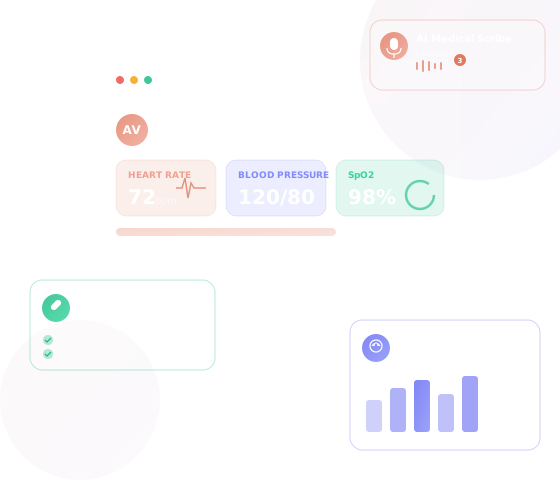
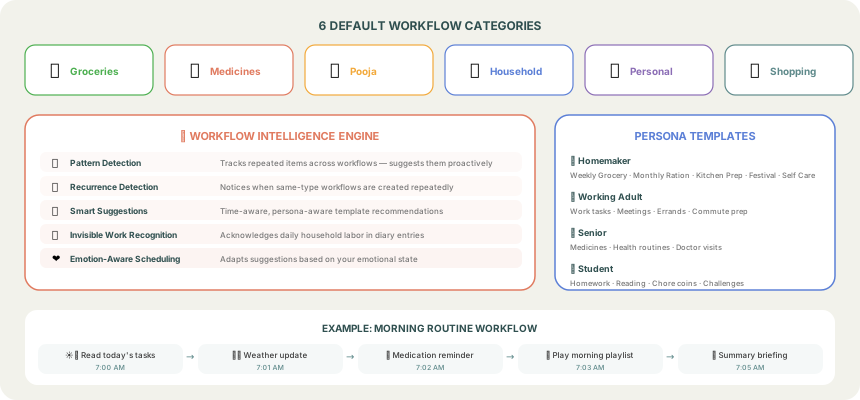
This phased approach is useful for providers evaluating EMR software in India because it reflects how hospitals actually adopt software: first standardize intake, then improve documentation, then strengthen team usage, and finally optimize reporting and controls.
Local context
Hospitals and clinics in India often manage a mix of paper habits, partial digitization, and department-specific processes. Bed management can be especially affected because it sits at the intersection of operations and care delivery. A practical EMR should therefore support both clinical depth and operational clarity. Features such as multilingual documentation, structured records, and implementation playbooks are useful in settings where teams need guided adoption rather than a purely technical deployment.
When reviewing EMR software in India, providers also tend to look for systems designed to align with Indian healthcare workflows, including OPD/IPD continuity and ABDM or ABHA readiness where applicable. The goal is not to force a generic global workflow onto local teams, but to support familiar hospital processes with better structure, visibility, and consistency.
Use cases
Multi-specialty hospitals: Coordinate admissions, transfers, and discharge documentation across departments while keeping the patient record unified.
Day-care and short-stay facilities: Track planned admissions and same-day discharge workflows with less manual follow-up.
Growing clinics with inpatient beds: Move from fragmented registers to a more structured digital workflow as patient volume increases.
Nursing stations and ward teams: Maintain clearer visibility into current patients, pending documentation, and handoff requirements.
Administrative leadership: Review occupancy-related workflow patterns through structured records and reporting rather than disconnected spreadsheets.
FAQ
Can this EMR support both OPD and IPD workflows?
Yes. The platform is designed around hospital and clinic workflows, so outpatient consultations can connect more smoothly with inpatient admissions, documentation, and follow-up.
Is this only for large hospitals?
No. While larger hospitals may use it for more complex bed movement and team coordination, smaller facilities with inpatient beds can also benefit from structured records and standardized admission-to-discharge workflows.
How does it help bed management specifically?
It links bed-related operational steps with the patient record, so admission details, clinical notes, transfers, discharge summaries, and follow-up instructions stay connected instead of being managed in separate tools.
Does it support privacy and controlled access?
Yes. Role-based access is used to support workflows aligned with controlled record visibility, so different users can work within the same system according to their responsibilities.
CTA
If your team is evaluating EMR software in India for better bed management, focus on how the system supports real inpatient operations, not just digital record storage. A practical EMR should help your staff move from admission to discharge with clearer documentation, better coordination, and fewer manual gaps. Explore the product pathways for hospitals, doctors, and features to assess whether the workflow fit matches your facility's needs.