Introduction
Case management depends on timely documentation, coordinated follow-up, and clear visibility across the patient journey. For clinics and hospitals that want more structured records and smoother handoffs, EMR software in India can support day-to-day care delivery without forcing teams into fragmented tools. A practical EMR should help clinicians capture consultations, maintain longitudinal records, organize OPD and IPD workflows, and keep case notes accessible to the right users at the right time.
This page focuses on how EMR software supports case management teams in Indian healthcare settings. The goal is not just digitization, but better continuity across registration, consultation, charting, discharge planning, and follow-up. A well-designed system can reduce duplicate entry, improve record consistency, and support documentation workflows aligned with evolving digital health expectations such as ABDM and ABHA readiness where relevant.
For organizations evaluating EMR software in India, the most useful approach is to look beyond generic record storage and assess how the platform fits real clinical operations. Case management requires structured patient histories, task-oriented documentation, role-based access, and reporting that helps teams review progress over time.
Department workflow
In case management, the workflow usually starts with patient registration and intake, then moves into consultation, care planning, ongoing documentation, coordination between departments, and discharge or follow-up tracking. In OPD settings, this may involve repeat visits, medication updates, and referral notes. In IPD settings, the workflow often includes admission details, progress notes, treatment updates, discharge summaries, and post-discharge instructions.
Without a structured system, teams often rely on paper files, disconnected spreadsheets, or messaging-based coordination. That creates delays in retrieving records, inconsistency in note formats, and difficulty in reviewing the full patient timeline. EMR software in India is most effective for case management when it supports a single patient record with structured fields, chronological notes, and department-specific templates that can be adapted to local workflows.
For hospitals, this means better coordination between front desk, doctors, nursing teams, and administrators. For clinics, it means faster access to prior visits, clearer follow-up planning, and more reliable documentation. The value is especially visible in departments that manage recurring cases, chronic conditions, multi-visit treatment plans, or referrals requiring continuity.
Features mapped to workflow
A case management team needs features that map directly to operational steps rather than a long list of disconnected modules. Structured patient records help capture demographics, visit history, diagnoses, medications, allergies, and treatment notes in one place. OPD management supports appointment-linked consultations and repeat visit tracking. IPD-oriented workflows help organize admission records, progress documentation, and discharge preparation.
AI-assisted notes can help clinicians document faster by supporting more consistent charting, while multilingual documentation can be useful in settings where teams and patients work across different languages. Templates for consultation notes, progress updates, discharge summaries, and follow-up instructions help standardize records without removing clinical flexibility. Role-based access matters because case management often involves multiple users with different responsibilities, from registration staff to consultants and care coordinators.
Reporting features are also important. Teams may need to review visit volumes, pending follow-ups, documentation completeness, or department-level workflow bottlenecks. A practical EMR should support these reviews through structured data capture and searchable records. For organizations comparing options, EMR software India healthcare buyers often prioritize usability, implementation support, and the ability to align software features with existing clinical routines.
How It Works
The most effective rollout for case management is phased and operationally grounded. Instead of switching everything at once, teams can implement the system in stages that reflect actual care delivery.
- Set up intake and registration workflows: Configure patient registration fields, identifiers, visit types, and intake forms so front-desk teams can create complete records from the first interaction. This establishes a structured base for consultation, repeat visits, and case tracking.
- Build documentation templates for consultations and charting: Create templates for OPD notes, IPD progress entries, care plans, medication updates, and discharge summaries. Structured templates help clinicians document consistently while preserving flexibility for specialty-specific observations.
- Enable team adoption by role: Train registration staff, doctors, nursing teams, and coordinators on their specific workflows. Role-based access ensures each user sees the functions and records relevant to their responsibilities, supporting controlled visibility for sensitive information.
- Use the EMR during live care delivery: During consultations, clinicians can review history, add notes, update diagnoses, record treatment plans, and prepare follow-up instructions. For admitted patients, teams can maintain ongoing progress notes and discharge documentation within the same patient record.
- Audit records and optimize workflows: After go-live, review documentation quality, turnaround time, follow-up completion, and reporting needs. Refine templates, permissions, and workflow steps so the system better supports case management over time.
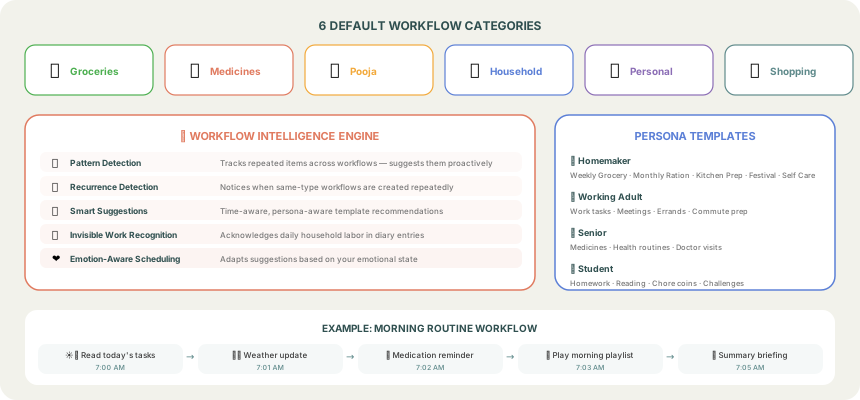
This phased model is useful because case management depends on adoption as much as software capability. A system may offer strong features, but value appears only when registration, consultation, charting, discharge, and reporting are connected in daily practice. That is why many providers evaluating EMR software in India look for implementation playbooks and workflow mapping, not just feature lists.
Local context
Healthcare providers in India often operate across mixed digital maturity levels, varied documentation habits, and high patient throughput. In this environment, the right EMR should be practical for both smaller clinics and larger hospitals. It should support structured records without making consultations slower, and it should fit OPD and IPD operations that may differ by specialty, team size, and location.
Another important consideration is digital health readiness. Many organizations prefer systems designed to align with ABDM-linked workflows and ABHA-related record practices where applicable, while still keeping implementation grounded in current operational needs. For this reason, EMR software in India should be evaluated for usability, documentation structure, multilingual support, and the ability to scale from basic digitization to more mature workflow standardization.
Local success also depends on implementation discipline. Stable templates, clear user roles, and published workflow standards matter more than one-time customization. Clinics and hospitals usually benefit when the EMR supports repeatable processes that can be reviewed and improved over time.
Use cases
Case management workflows vary, but several common use cases show where an EMR adds practical value. A multispecialty clinic can use the system to maintain longitudinal records for repeat patients, making it easier to review prior consultations and plan follow-ups. A hospital department can use structured progress notes and discharge templates to improve continuity between inpatient care and post-discharge review. A doctor-led practice can use multilingual documentation and AI-assisted notes to reduce time spent on repetitive charting while keeping records organized.
Care coordinators may use the EMR to track pending follow-ups, referral notes, and documentation status across active cases. Administrators may use reporting views to identify incomplete records or workflow delays. In all these scenarios, the benefit comes from connecting documentation to operational steps rather than treating the EMR as a passive archive.
FAQ
Is this EMR suitable for both clinics and hospitals?
Yes. The workflow approach supports outpatient and inpatient documentation needs, with structured records, consultation templates, and follow-up tracking that can be adapted to different care settings.
Can case management teams use it for repeat visits and long-term follow-up?
Yes. A structured patient timeline helps teams review prior visits, update treatment plans, and maintain continuity across recurring consultations and follow-up cycles.
Does the software support role-based access?
Yes. Role-based access helps limit visibility based on user responsibilities, which is useful for registration teams, clinicians, nursing staff, and administrators working on the same patient journey.
Is it designed for Indian healthcare workflows?
It is designed around common clinic and hospital workflows in India, including OPD and IPD operations, structured documentation, multilingual use, and readiness for ABDM or ABHA-linked processes where relevant.
CTA
If your organization is reviewing options for EMR software in India, start with the case management workflow: intake, consultation, charting, discharge, and follow-up. A practical EMR should support each step with structured records, usable templates, and implementation guidance that helps teams adopt the system in real care settings. Explore how a workflow-focused EMR can support more consistent documentation and better coordination across clinics and hospitals in India.