Introduction
Clinical Immunology teams manage complex patient journeys that often involve recurring consultations, long-term monitoring, medication history, laboratory correlation, and careful documentation across outpatient and hospital settings. EMR software in India can help bring these moving parts into one structured workflow so clinicians, nursing teams, and front-desk staff work from the same patient record. For immunology practices, the value is not only digitising notes, but also improving continuity across registration, consultation, charting, follow-up planning, and reporting.
This page is designed for hospitals and clinics evaluating a practical digital record system for Clinical Immunology. The focus is on reusable product value: structured patient records, OPD and IPD support, implementation playbooks, multilingual documentation, AI-assisted notes, and policy-aware record controls designed to align with Indian healthcare workflows. The result is a more organised way to document symptoms, immune history, treatment plans, and follow-up instructions without relying on fragmented paper files or disconnected spreadsheets.
Department workflow
Clinical Immunology workflows usually begin with registration and prior history capture, followed by consultation, review of investigations, treatment planning, and repeat follow-up visits. In many centres, these steps are handled by different people at different times, which makes consistency difficult when records are not structured. A digital workflow helps standardise how patient demographics, presenting complaints, allergy details, medication history, prior episodes, and physician observations are recorded.
For OPD settings, the department often needs quick access to previous visits, symptom progression, prescriptions, and planned reviews. For hospital-based care, teams may also need to coordinate admission notes, inpatient progress, discharge summaries, and follow-up scheduling. Clinical Immunology departments can also benefit from better visibility into recurring cases, chronic management pathways, and documentation quality across consultants and support staff. EMR software in India is especially useful when organisations want one system that supports both day-to-day care delivery and cleaner internal reporting.
Features mapped to workflow
A useful EMR for Clinical Immunology should map directly to operational tasks rather than act as a generic digital filing cabinet. Structured patient records support consistent capture of demographics, visit history, allergies, medication lists, and clinical observations. OPD management tools help organise appointments, queues, consultation flow, and follow-up planning. AI-assisted notes can reduce repetitive typing during consultations while still allowing clinicians to review and finalise documentation before saving.
Multilingual documentation can support teams serving diverse patient populations and staff preferences. Role-based access matters when front-desk teams, doctors, nursing staff, and administrators need different levels of visibility into records and operational data. Policy-aware record controls can support workflows aligned with local documentation expectations without making unrealistic compliance claims. For hospitals and larger clinics, implementation playbooks are equally important because adoption depends on how registration, charting, discharge, and reporting are configured in practice.
In Clinical Immunology, these capabilities are relevant across common tasks such as reviewing prior episodes, documenting symptom patterns, recording treatment response, preparing follow-up instructions, and maintaining continuity over multiple visits. This is where EMR software in India becomes more than a record repository; it becomes an operational system for coordinated care.
How It Works
The rollout for Clinical Immunology is most effective when implemented in phases, with each phase tied to real clinical operations rather than a one-time software switch.
- Set up intake and registration workflows: Configure patient registration fields, visit types, identifiers, and front-desk intake steps for OPD and hospital use. This creates a structured starting point for demographics, referral details, prior history, and visit categorisation so every consultation begins with cleaner data capture.
- Build documentation templates for consultations: Create specialty-relevant templates for presenting complaints, immune history, allergies, medication review, examination notes, assessment, and treatment plans. AI-assisted note support can help clinicians draft consultation records faster, while structured fields make charting more consistent across repeat visits.
- Enable team-based usage across the care journey: Assign role-based access for reception, clinicians, nursing teams, and administrators. During consultation and charting, the doctor can review prior records, update findings, and document plans; support staff can coordinate scheduling, follow-up, and operational handoffs without unnecessary access to restricted information.
- Standardise discharge and follow-up workflows: For patients needing admission-linked care or extended management, the system can support discharge summaries, medication instructions, and follow-up scheduling from the same patient record. This helps maintain continuity between consultation, treatment documentation, and the next review visit.
- Audit records and optimise reporting: After go-live, teams can review documentation completeness, turnaround patterns, and reporting needs. This phase helps refine templates, improve adoption, and support workflows aligned with internal governance and evolving operational requirements.
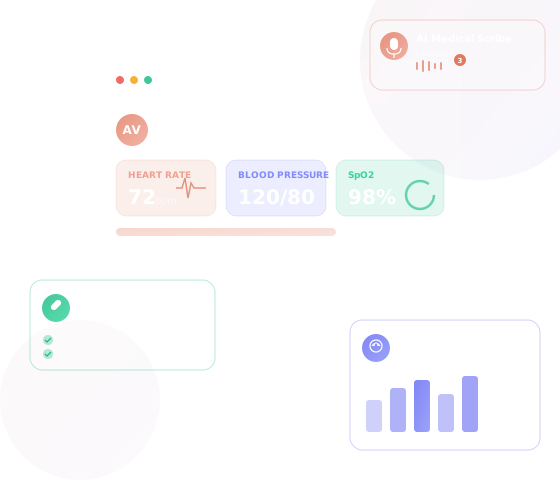
This phased approach is particularly relevant for Clinical Immunology because patient journeys are often longitudinal. Instead of forcing teams to change everything at once, the product supports a gradual move from intake setup to documentation templates, team adoption, and ongoing optimisation.
Local context
Healthcare organisations in India often need digital systems that fit mixed operational realities: high OPD volume, variable documentation maturity, multilingual communication, and a combination of clinic and hospital workflows. EMR software in India should therefore be practical to implement, easy to navigate for different user roles, and flexible enough to support both specialty-specific notes and broader institutional processes.
For Clinical Immunology departments, local context also includes the need to maintain clear records over time as patients return for review, medication adjustments, and ongoing assessment. Systems designed for Indian healthcare settings may also support workflows aligned with ABDM and ABHA readiness, where relevant to the organisation’s digital roadmap. The key is to choose a platform that supports operational consistency without overcomplicating daily care delivery.
Use cases
Clinical Immunology clinics can use the system to manage new patient registration, structured consultation notes, repeat visit tracking, and follow-up scheduling from one place. Hospital departments can use it to connect OPD consultations with inpatient documentation, discharge summaries, and internal reporting. Multi-doctor practices may use shared templates to improve consistency across clinicians while preserving individual note review and sign-off.
Another common use case is improving visibility into patient history during repeat visits. Instead of searching through paper files, clinicians can review prior complaints, medications, allergies, and treatment plans in a structured timeline. Administrative teams can also benefit from cleaner records for coordination, reporting, and operational review. For organisations comparing digital options, EMR software in India should be evaluated on how well it supports these everyday workflows, not just on feature lists.
FAQ
Can this EMR support both OPD and hospital workflows for Clinical Immunology?
Yes. It is designed to support structured records across outpatient consultations and broader hospital workflows, including documentation continuity, discharge-related records, and follow-up planning.
Is the system suitable for repeat and long-term patient management?
Yes. Clinical Immunology often involves longitudinal care, and structured patient records help teams review prior visits, medication history, allergies, and treatment plans more efficiently over time.
How does the product help with documentation quality?
The platform supports structured templates, AI-assisted notes, and role-based workflows so teams can document consultations more consistently while keeping clinician review central to the process.
Does it support Indian healthcare workflow needs?
The product is designed for Indian clinics and hospitals, with support for multilingual documentation, OPD/IPD operations, and workflows aligned with local digital health expectations.
CTA
If your Clinical Immunology department is looking for a more organised way to manage records, consultations, and follow-up journeys, explore a workflow-led approach to EMR software in India. Review the core EMR experience, compare features relevant to hospitals and doctors, and assess how a phased rollout can fit your clinic or hospital operations with minimal disruption.
Explore EMR overview | View EMR features | Learn more about EMR software India healthcare