Introduction
Clinical nutrition teams manage detailed assessments, diet plans, progress tracking, and follow-up communication across OPD and inpatient settings. An effective digital record system helps bring these activities into one structured workflow instead of spreading them across paper files, spreadsheets, and disconnected messages. For hospitals and clinics evaluating EMR software in India, the priority is usually practical usability: faster documentation, clearer patient history, better coordination with doctors, and records that are easier to review over time.
This page explains how EMR software can support clinical nutrition departments in India with structured patient records, consultation notes, care plans, follow-up tracking, and reporting. The focus is on reusable operational value for healthcare organizations while also reflecting the needs of Indian care settings, where multilingual communication, OPD volume, and coordination across departments often shape day-to-day work. The platform approach described here is designed to align with hospital and clinic workflows and supports documentation practices aligned with evolving digital health expectations such as ABDM and ABHA readiness where relevant.
Department workflow
Clinical nutrition workflows often begin with referral intake or direct appointment booking, followed by nutritional assessment, diagnosis-related diet planning, counseling, progress review, and repeat follow-up. In hospitals, nutritionists may also coordinate with physicians, nursing teams, and discharge planners. In clinics, the workflow may be more consultation-led, with emphasis on history capture, anthropometric data, dietary recall, treatment goals, and continuity across repeat visits.
A structured EMR helps standardize these steps. Registration data can be captured once and reused across visits. Consultation templates can support consistent recording of symptoms, dietary habits, allergies, lab-linked observations, and nutrition recommendations. Follow-up visits can reference prior plans without re-entering the full history. For inpatient care, nutrition notes can be organized alongside broader patient records so teams can review interventions in context. This is where EMR software in India becomes especially useful for organizations trying to reduce fragmented documentation while maintaining department-specific detail.
For clinical nutrition departments, the workflow usually includes patient registration, initial assessment, charting, care plan creation, review scheduling, and outcome tracking. A well-designed EMR supports each stage with structured fields and flexible notes, helping teams document consistently without making the consultation feel rigid.
Features mapped to workflow
Structured patient records: Nutrition teams need a longitudinal view of patient history, including prior consultations, diagnoses, allergies, medications, diet plans, and progress notes. Structured records make repeat visits easier to manage and support continuity across clinicians.
OPD and consultation management: For outpatient nutrition practice, appointment-linked records and consultation workflows help clinicians move from registration to assessment and follow-up with less manual coordination.
Template-based documentation: Nutrition assessments often repeat core data points such as weight trends, BMI-related observations, dietary recall, goals, and counseling notes. Templates can reduce repetitive typing while preserving consistency.
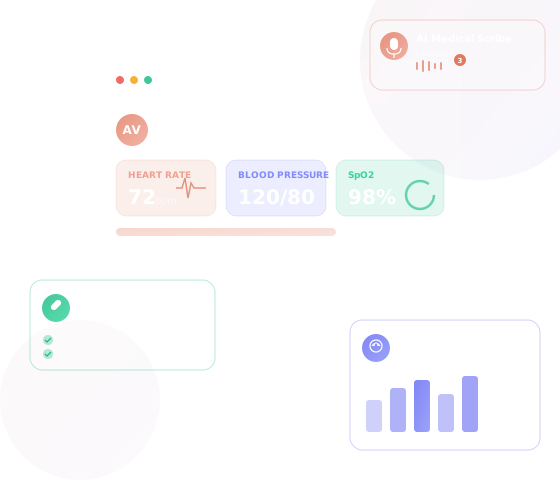
AI-assisted notes: Where appropriate, AI-assisted note support can help clinicians draft consultation summaries faster. Teams still review and finalize records, but the workflow can become more efficient for busy OPD settings.
Multilingual documentation support: In India, patient communication and internal documentation may involve multiple languages. Multilingual support can help teams document and communicate more effectively across diverse care settings.
Role-based access: Nutrition departments often work within larger hospitals where access should differ by role. Role-based controls help ensure that relevant staff can view or update records according to operational needs.
Reporting and review: Department leads may need visibility into consultation volume, follow-up patterns, and documentation completeness. Reporting tools support operational review without requiring separate manual trackers.
These capabilities make EMR software in India relevant not only for large hospitals but also for specialty clinics and multi-doctor practices that want more consistent nutrition documentation and better coordination.
How It Works
The rollout of an EMR for clinical nutrition works best as a phased implementation tied to real care processes rather than a generic software deployment. A practical approach is outlined below.
- Set up intake and registration workflows: Start by configuring patient registration fields, referral sources, appointment types, and core identifiers used in OPD or hospital intake. This creates a consistent front-desk to clinician handoff and ensures nutrition consultations begin with complete demographic and visit context.
- Build documentation templates for nutrition consultations: Configure structured templates for initial assessment, dietary history, anthropometric observations, counseling notes, and follow-up plans. This helps clinicians capture repeatable data points while keeping room for free-text clinical judgment. Templates can also support multilingual documentation where teams need flexibility.
- Enable consultation charting and care plan workflows: During the visit, clinicians document findings, create diet recommendations, and record goals in the patient chart. AI-assisted notes can support faster drafting of summaries, while structured records make it easier to compare current and previous visits. For inpatient settings, nutrition notes can be maintained within the broader patient record for coordinated care.
- Train teams on role-based usage: Front desk staff, nutritionists, doctors, and administrators should each use the system according to their role. Role-based access matters here because registration teams may update demographics, clinicians may chart consultations, and department leads may review reports. This supports workflows aligned with internal governance and record control practices.
- Use discharge, follow-up, and reporting loops to optimize: After consultations or inpatient interventions, teams can document follow-up schedules, review adherence, and monitor progress over time. Department reporting then helps identify documentation gaps, repeat-visit patterns, and operational bottlenecks so templates and workflows can be refined after go-live.
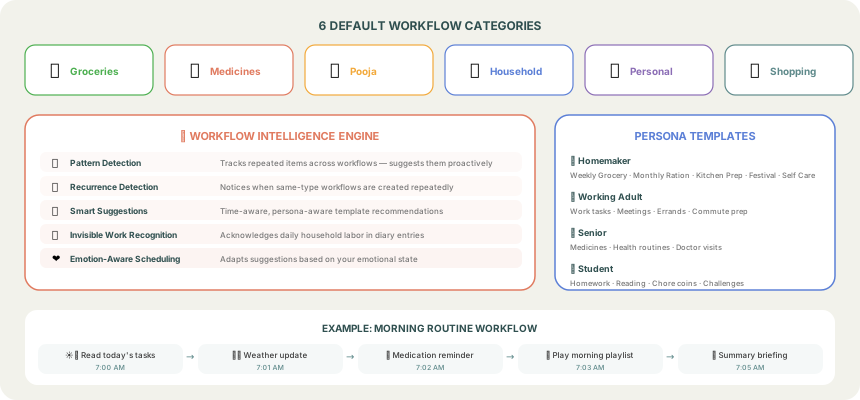
This phased model is useful for organizations comparing EMR software in India because it focuses on implementation playbooks, team adoption, and measurable workflow improvement rather than only feature lists.
Local context
Healthcare organizations in India often need software that can adapt to mixed operating models: standalone clinics, hospital-based departments, and growing multi-location practices. Clinical nutrition teams may work across preventive care, chronic condition support, wellness programs, and inpatient recovery pathways. As a result, documentation needs can vary from short OPD notes to detailed longitudinal care plans.
In this context, EMR software in India should support structured records without forcing every organization into the same template. Multilingual documentation, OPD efficiency, and readiness for digital health workflows are practical considerations. Many providers also prefer systems with stable published content, clear product pathways, and implementation guidance rather than unclear custom setups. For Indian hospitals and clinics, this makes operational fit just as important as software capability.
Use cases
Hospital nutrition departments: Manage inpatient assessments, physician referrals, progress notes, and discharge-linked nutrition instructions within a connected patient record.
Outpatient diet and nutrition clinics: Capture first-visit assessments, create structured care plans, and track repeat consultations with easier access to prior notes.
Multi-specialty clinics: Coordinate nutrition consultations with physician-led care for diabetes, gastroenterology, oncology support, or preventive health programs.
Preventive and lifestyle programs: Standardize counseling documentation, monitor follow-up adherence, and maintain longitudinal records for recurring visits.
Growing healthcare groups: Use implementation playbooks and standardized templates to bring more consistency across locations and teams.
These use cases show how EMR software in India can support both department-level efficiency and broader organizational coordination in India healthcare settings.
FAQ
Can an EMR support both hospital and clinic nutrition workflows?
Yes. A structured EMR can support outpatient consultations, inpatient notes, follow-up planning, and coordination with other departments, depending on how workflows are configured.
Is this useful for repeat follow-up consultations?
Yes. Longitudinal patient records help clinicians review earlier assessments, recommendations, and progress notes without rebuilding the chart each time.
How does role-based access help a nutrition department?
Role-based access helps separate front-desk, clinician, and administrative responsibilities so teams can work efficiently while maintaining appropriate record controls.
Can the system support multilingual documentation?
Many India healthcare environments benefit from multilingual workflows. Documentation support in multiple languages can improve usability for both staff and patient communication.
Does the EMR guarantee compliance?
No software should be described as guaranteeing compliance on its own. The system can be designed to align with healthcare documentation workflows and support practices aligned with organizational and policy requirements.
CTA
If your organization is evaluating EMR software in India for a clinical nutrition department, focus on how well the system supports structured records, OPD and inpatient workflows, template-based charting, team adoption, and long-term documentation quality. A practical EMR should help nutrition teams document faster, review history more clearly, and coordinate better with the wider care team. Explore product pathways such as core EMR, feature overviews, hospital workflows, doctor workflows, and compliance-security information to assess fit for your India healthcare environment.