Introduction
Gynecology teams manage a wide range of outpatient and hospital workflows, from routine consultations and menstrual health reviews to antenatal follow-ups, procedure documentation, and long-term continuity of care. A well-designed digital record system helps bring these activities into one structured workflow so clinicians, nurses, and front-desk teams can work from the same patient context. For clinics and hospitals evaluating EMR software in India, the priority is usually practical usability: faster registration, clearer charting, better follow-up visibility, and records that remain easy to retrieve over time.
This page focuses on how EMR software can support gynecology departments in India with structured patient records, OPD and IPD coordination, multilingual documentation support, and implementation workflows suited to real clinical environments. The goal is not to replace clinical judgment, but to reduce administrative friction and improve documentation consistency across consultations, procedures, discharge planning, and follow-up care.
Department workflow
Gynecology care often involves repeated visits, sensitive history taking, diagnostic review, and treatment plans that evolve over time. In a typical workflow, the patient is registered, prior records are reviewed, the consultation is documented, investigations are ordered or reviewed, medications and advice are recorded, and follow-up is scheduled. In hospital settings, the same patient journey may extend into admission notes, procedure records, nursing coordination, discharge summaries, and post-discharge review.
These workflows benefit from structured digital records because the department needs continuity across episodes of care. A gynecologist may need to compare symptoms across visits, review prior prescriptions, track procedure notes, or revisit antenatal observations without searching through fragmented files. Front-desk teams need accurate demographics and visit history. Nursing and support staff need clear instructions. Administrators need reporting visibility without disrupting clinical work. This is where EMR software in India becomes useful for both standalone clinics and multispecialty hospitals.
Features mapped to workflow
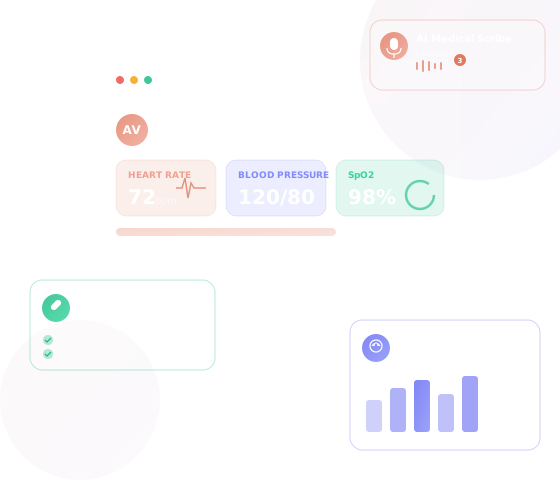
For gynecology departments, the value of an EMR is strongest when features map directly to day-to-day operations rather than existing as generic software modules. Structured patient records help capture demographics, visit history, complaints, examination findings, diagnosis, treatment plans, and follow-up instructions in a consistent format. OPD management supports appointment-linked consultations, queue visibility, and visit documentation. For admitted patients, IPD-oriented records can support continuity from admission through discharge.
Template-based charting is especially useful in gynecology because many visits follow recurring documentation patterns while still requiring room for clinical nuance. Teams can use configurable templates for routine consultations, antenatal reviews, post-procedure follow-ups, and discharge documentation. AI-assisted notes may help speed up drafting, while clinicians retain control over review and finalization. Multilingual documentation support can also help teams working across diverse patient populations and staff preferences.
Role-based access matters in departments handling sensitive patient information. Reception teams may need registration access, clinicians need charting access, and administrators may need reporting views. Record controls designed to align with policy-aware workflows can help departments manage who sees what and when, without making broad claims about certification. For organizations planning digital health interoperability, ABDM and ABHA readiness may also be relevant as part of a broader roadmap.
How It Works
A practical rollout for gynecology departments works best in phases, starting with intake and documentation basics before expanding into optimization. Below is a concrete workflow for adopting EMR software in India in a clinic or hospital setting.
- Set up intake and registration workflows: Begin by configuring patient registration fields, visit types, clinician schedules, and front-desk intake steps. This helps standardize demographics, contact details, visit reasons, and prior history capture at the first touchpoint. For gynecology, teams can define intake fields relevant to recurring consultations and follow-up visits.
- Build consultation and charting templates: Create structured templates for routine gynecology consultations, antenatal reviews, procedure notes, discharge summaries, and follow-up instructions. Clinicians can document complaints, examination findings, assessments, prescriptions, and advice in a consistent format while still editing free text where needed. AI-assisted note support can help draft records faster, but final review remains with the care team.
- Train teams by role and start phased adoption: Reception staff learn registration and appointment-linked workflows, clinicians adopt charting and prescription documentation, and nursing or support teams use the system for care coordination and discharge-related tasks. Role-based access helps ensure each user sees the functions relevant to their responsibilities.
- Use the EMR across the patient journey: During live use, the system supports registration, consultation documentation, review of prior records, medication and advice entry, discharge or follow-up planning, and reporting. In hospital settings, this can extend from OPD to IPD continuity so the patient record remains connected across episodes of care.
- Audit records and optimize workflows: After rollout, teams review documentation completeness, template usage, turnaround time for notes, and reporting needs. Administrators can refine templates, access controls, and workflow steps based on actual usage patterns. This helps the department improve consistency without forcing unnecessary complexity.
Local context
Healthcare organizations in India often need software that can adapt to mixed operating environments: high-volume OPD days, variable documentation habits, multilingual teams, and a combination of clinic and hospital workflows. In gynecology, this can include everything from routine consultations and preventive visits to procedure-linked documentation and longitudinal follow-up. EMR software in India should therefore support practical implementation, not just feature lists.
For many providers, the local requirement is flexibility. Some departments need a clinic-first setup with fast consultation notes and follow-up tracking. Others need broader hospital coordination with admission, discharge, and reporting workflows. Systems designed for India healthcare settings are often expected to support structured records, implementation playbooks, and documentation workflows aligned with evolving digital health expectations, while remaining usable for everyday care delivery.
Use cases
Gynecology clinics can use an EMR to standardize routine OPD consultations, maintain longitudinal patient histories, and improve follow-up planning for recurring conditions. Hospitals can use it to connect outpatient visits with admissions, procedure documentation, discharge summaries, and subsequent reviews. Departments with multiple doctors can benefit from consistent templates and easier access to prior records when patients see different clinicians over time.
Other common use cases include antenatal follow-up documentation, post-procedure review notes, medication and advice tracking, and internal reporting for operational oversight. Because the product is built around structured records and OPD/IPD workflows, it can support both focused specialty practices and larger organizations looking for a more unified documentation approach. For teams comparing options, EMR software in India is most valuable when it reduces repeat data entry, improves record retrieval, and supports smoother handoffs between staff roles.
FAQ
Can this EMR support both clinic and hospital gynecology workflows?
Yes. It is designed to support outpatient documentation as well as broader hospital workflows such as admission-linked records, discharge documentation, and continuity across visits.
Is it suitable for recurring follow-up care in gynecology?
Yes. Structured patient records make it easier to review prior consultations, prescriptions, advice, and follow-up plans over time, which is useful for longitudinal care.
How does the system help with documentation speed?
It supports structured templates and AI-assisted note drafting to reduce repetitive typing. Clinicians can review and finalize records based on their preferred workflow.
Does it support access control for different staff roles?
Yes. Role-based access can help clinics and hospitals define who can register patients, document consultations, review records, or access reports, supporting workflows aligned with internal policies.
CTA
If your gynecology department is evaluating EMR software in India, focus on systems that match real clinical workflows: structured records, practical OPD and IPD support, configurable templates, and a rollout approach your team can adopt without disruption. Explore a setup that helps clinicians document clearly, helps staff coordinate efficiently, and helps organizations build a more reliable digital record foundation for women’s health services in India.